Packaging in 2026 is becoming more than a protective shell. It is now a communication channel, a data source, and an interactive experience that connects brands with consumers. Several printing and packaging trends are shaping the future, especially around QR codes, smart packaging, and digital integration. Smart Packaging with QR Codes and Digital Connectivity QR codes have moved beyond simple links to digital menus or coupons. In 2026, they are a core part of smart packaging strategies. Enhanced QR codes powered by GS1 Digital Link standards allow brands to update product information without changing the physical packaging. Scanning a code can now reveal full product origin stories, digital product passports, and supply chain details in real time Smart packaging also incorporates NFC and RFID technologies. These printed elements make packaging interactive, traceable, and secure. Used in food, cosmetics, and pharmaceuticals, smart labels help with freshness tracking, authenticity verification, and consumer engagement at the point of use. Digital Printing and Personalization Digital printing is reshaping how brands design and produce packaging. Unlike traditional methods, digital printing supports short runs, frequent updates, and rapid versioning without high setup costs. This makes personalization practical. Brands can include personal names, regional messaging, or limited‑edition designs on packaging, which strengthens consumer connection and loyalty. Personalized packaging also supports seasonal campaigns and test launches by reducing waste and managing inventory more efficiently. Interactive Consumer Experiences Interactive packaging is a growing trend where physical packaging becomes a bridge to digital experiences. QR codes, often combined with augmented reality (AR), let consumers access extra content such as tutorials, games, or storytelling sequences related to the product. These experiences can transform a passive purchase into a memorable brand interaction. This shift is especially strong in sectors like beverages, food products, and consumer electronics. Brands use these digital layers to extend engagement beyond the point of sale and build stronger relationships. Traceability and Transparency Regulations and consumer demand are pushing packaging toward greater transparency. Smart labels with QR codes allow brands to share detailed information on material sourcing, recycling instructions, and safety standards. This level of transparency helps products meet compliance requirements while improving consumer trust. Sustainability and Smart Integration Technology complements sustainability goals. Smart packaging helps reduce waste by supporting right‑sized information distribution—extra product details go on digital platforms instead of crowded physical labels. Sustainable materials such as recyclable paperboard and mono‑material films are also becoming standard, blending smart technology with eco‑friendly printing choices.
Packaging in 2026 is becoming more than a protective shell. It is now a communication channel, a data source, and an interactive experience that connects brands with consumers. Several printing and packaging trends are shaping the future, especially around QR codes, smart packaging, and digital integration.
Smart Packaging with QR Codes and Digital Connectivity
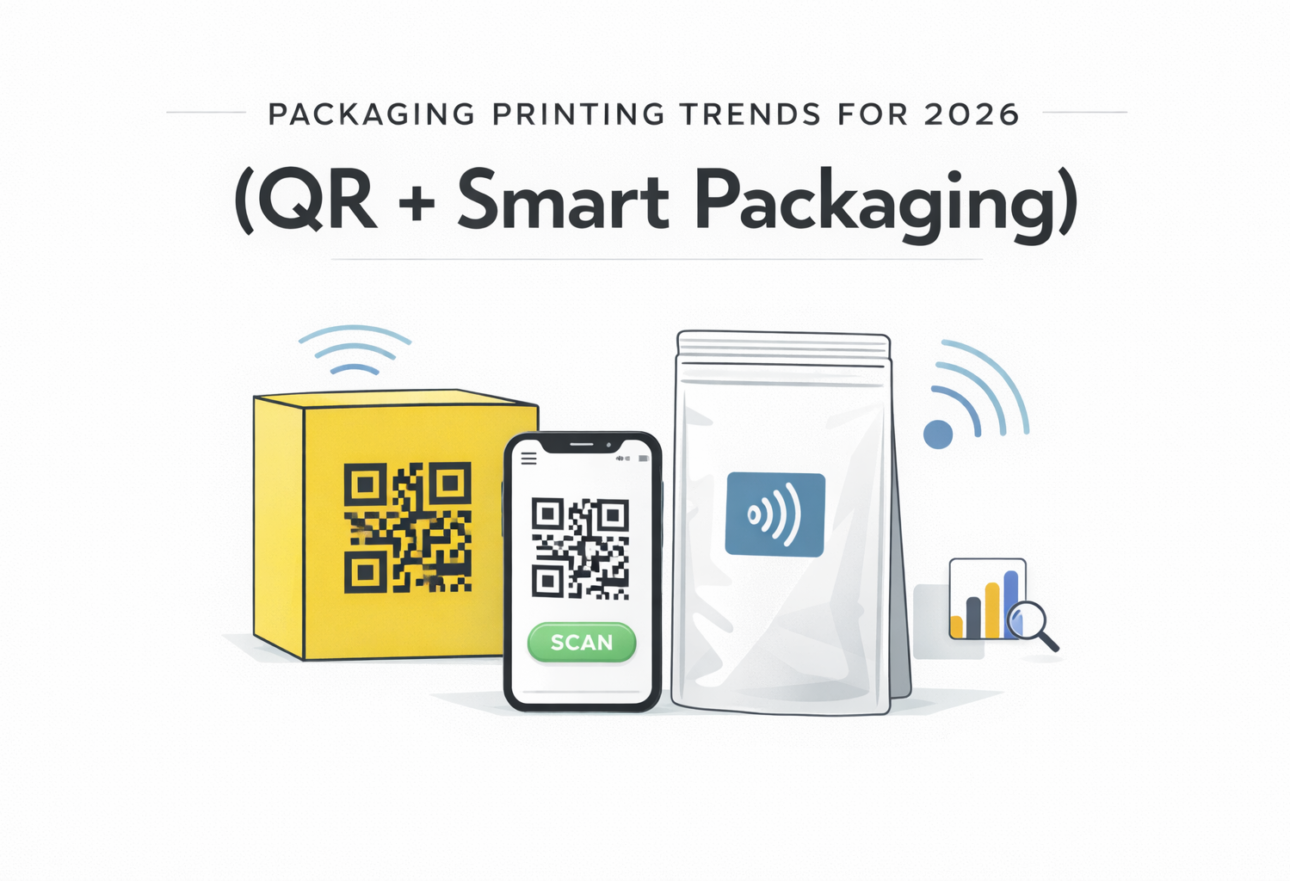
QR codes have moved beyond simple links to digital menus or coupons. In 2026, they are a core part of smart packaging strategies. Enhanced QR codes powered by GS1 Digital Link standards allow brands to update product information without changing the physical packaging. Scanning a code can now reveal full product origin stories, digital product passports, and supply chain details in real time
Smart packaging also incorporates NFC and RFID technologies. These printed elements make packaging interactive, traceable, and secure. Used in food, cosmetics, and pharmaceuticals, smart labels help with freshness tracking, authenticity verification, and consumer engagement at the point of use.
Digital Printing and Personalization
Digital printing is reshaping how brands design and produce packaging. Unlike traditional methods, digital printing supports short runs, frequent updates, and rapid versioning without high setup costs. This makes personalization practical. Brands can include personal names, regional messaging, or limited‑edition designs on packaging, which strengthens consumer connection and loyalty.
Personalized packaging also supports seasonal campaigns and test launches by reducing waste and managing inventory more efficiently.
Interactive Consumer Experiences
Interactive packaging is a growing trend where physical packaging becomes a bridge to digital experiences. QR codes, often combined with augmented reality (AR), let consumers access extra content such as tutorials, games, or storytelling sequences related to the product. These experiences can transform a passive purchase into a memorable brand interaction.
This shift is especially strong in sectors like beverages, food products, and consumer electronics. Brands use these digital layers to extend engagement beyond the point of sale and build stronger relationships.
Traceability and Transparency
Regulations and consumer demand are pushing packaging toward greater transparency. Smart labels with QR codes allow brands to share detailed information on material sourcing, recycling instructions, and safety standards. This level of transparency helps products meet compliance requirements while improving consumer trust.
Sustainability and Smart Integration
Technology complements sustainability goals. Smart packaging helps reduce waste by supporting right‑sized information distribution—extra product details go on digital platforms instead of crowded physical labels. Sustainable materials such as recyclable paperboard and mono‑material films are also becoming standard, blending smart technology with eco‑friendly printing choices.